

The global beauty market is now worth nearly $579 billion and continues to grow at an annual rate of 6%. Product launches are accelerating, brands are investing heavily in their stores, and premium experiences have become a key differentiator.
Yet behind this growth, a new reality is emerging: in beauty, loyalty is no longer built solely through points and discounts. It is built through relationships.
For years, beauty loyalty programs followed a simple model: earn points, unlock tiers, receive promotional offers. A model that has become so standardized that it often makes brands feel interchangeable.
Customer expectations, however, are evolving. Today, consumers are looking for personalized advice, premium experiences, recognition, ongoing support, and a relationship that extends beyond the transaction itself.
The challenge is strategic. Retaining an existing customer costs on average five times less than acquiring a new one. More importantly, a relatively small group of loyal customers generates a significant share of a brand's revenue.
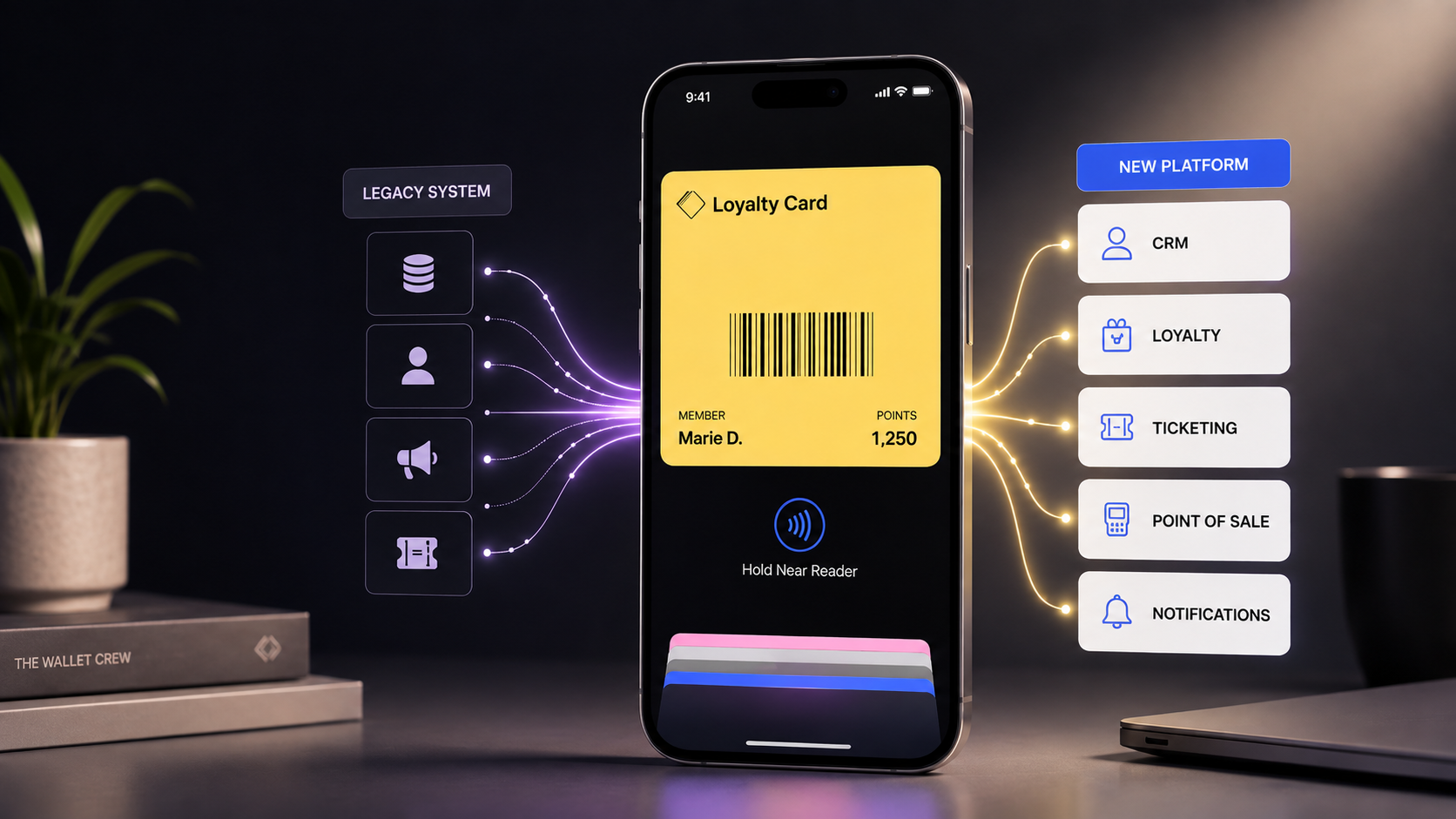
The question is therefore no longer simply: "How do we drive purchases?" but rather: "How do we maintain the relationship between visits?" This is where mobile wallets are beginning to reshape beauty strategies.
Experience: the new core of beauty retail
Beauty retail is undergoing a profound transformation. Brands are no longer just selling products. They are creating experiences.
Stores are becoming consultation spaces, treatment centers, and beauty institutes. Some brands are even creating fully immersive destinations. Caudalie, for example, has built an entire ecosystem around its historic vineyard estate, combining a luxury hotel, spa, gastronomy, and vineyards to extend the brand experience far beyond the product itself.
L'Occitane operates spas across multiple countries, while brands such as La Mer and Rituals continue to develop immersive customer activations. Others, like P.Louise, have built much of their growth around community-driven experiences before focusing on product sales.
In beauty, products alone are no longer enough. Perceived value increasingly comes from expertise, rituals, ongoing support, and the overall experience. Beauty advisors therefore play a critical role. When a customer visits a beauty counter, boutique, or spa, she is not simply looking for a cream or serum. She is looking for guidance tailored to her skin, lifestyle, season, and personal concerns. When trust is established, that relationship can last for years.
Yet maintaining continuity remains difficult. This is precisely where mobile wallets create value.
Mobile wallets: creating a seamless experience across stores and spas
With a customer card stored in a mobile wallet, identification becomes immediate. Beauty advisors can instantly access treatment history, preferences, previous purchases, and past recommendations.
The experience becomes smoother, more personal, and more premium. Customers no longer need to repeat their history or complete forms during every visit.
But wallets offer something even more valuable: they transform every interaction into actionable customer intelligence. Skin type, products used, treatments received, visit frequency, responsiveness to notifications—these behavioral signals allow brands to continuously refine their understanding of each customer.
In beauty, this level of knowledge is incredibly valuable. It enables personalization not at the segment level, but at the individual level.
Relationships: the true driver of loyalty
This is arguably one of the industry's biggest blind spots.
A customer receives a treatment at a brand spa. A beauty advisor recommends a personalized skincare routine. She leaves convinced, equipped with products suited to her needs. Then nothing happens.
A few weeks later, the routine has faded into daily life. Products are running low, her skin has evolved, and her needs have changed. Yet the relationship has not kept pace. She may receive a generic newsletter or a standard promotion that bears little resemblance to the experience she had in-store.
The customer has not been lost. The relationship simply hasn't been nurtured.
This is where the limitations of traditional loyalty programs become clear. Collecting points is no longer enough to build lasting emotional attachment. Customers expect continuity, recognition, context, and consistency between interactions.
Beauty follow-up: personalization and loyalty through mobile wallets
Mobile wallets extend the relationship beyond the store visit by transforming every appointment, consultation, or purchase into the beginning of a personalized customer journey.
A beauty advisor can recommend a skincare routine tailored to a customer's profile and schedule reminders when products are likely running low. Brands can share seasonal advice, suggest routine adjustments based on changing skin conditions, or invite customers for follow-up consultations.
This fundamentally changes the nature of loyalty. Customers no longer receive generic messages sent to everyone. Instead, they benefit from personalized support that reflects their history, habits, and previous interactions.
The wallet becomes a memory of the relationship. It allows brands to recognize customers, contextualize every interaction, and maintain meaningful engagement between visits.
Loyalty is no longer driven solely by rewards or points. It is built on the quality of the relationship and the relevance of each interaction.
The Wallet Crew use cases: Sabon & l'Occitane
Sabon: delivering a premium experience without friction
At Sabon, the Royal Passport loyalty program follows a simple principle: customers are already identified when they purchase the membership, so there is no need for additional enrollment steps.
A simple email containing an "Add to Wallet" button instantly delivers the pass.
The result: more than 10,000 wallet passes created in less than a year and an exceptionally low uninstall rate.
What this demonstrates is important: when a wallet is designed as a valuable service aligned with the brand experience, customers naturally keep it. They do not think about the technology. They think about their relationship with the brand.
L'Occitane: maintaining consistency across international markets
L'Occitane faced a different challenge. The brand needed to maintain a premium experience across independent markets, varying customer journeys, stores, spas, and partner networks.
The wallet naturally integrated into this ecosystem through personalized notifications, connected loyalty experiences, seamless customer journeys, and continuous engagement.
The rollout expanded progressively across Australia, New Zealand, Central Europe, Spain, and the United Kingdom.
Today, more than 250,000 wallet passes have been created. Yet the most interesting metric is not the number itself. Customers rarely think about the wallet. They simply think about their relationship with L'Occitane.
That is perhaps the strongest indicator of success: when technology becomes invisible and the experience takes center stage.
.png)
What if beauty loyalty were built differently?
Sabon and L'Occitane demonstrate what is already possible today. The following ideas explore what the most innovative brands may build tomorrow: loyalty that is less transactional, more emotional, and more continuous.
Because in beauty, customers do not stay for points. They stay because of how a brand makes them feel.
The first-time pass: turning a first visit into a relationship
Rather than asking customers to complete a registration form, brands could issue a wallet pass during the first visit. Together with a beauty advisor, customers build their first beauty profile: skin type, habits, concerns, and preferences.
The pass becomes more than a loyalty card. It becomes the starting point of a relationship.
The maison pass: replacing status levels with belonging
Inspired by luxury hospitality, this model replaces points and visible tiers with a stronger emotional connection.
Customers become Initiates, Members, or Ambassadors. What matters is not how many points they have accumulated, but the feeling that the brand recognizes them, remembers them, and values them.
The ritual skin pass: extending the relationship between visits
Skin evolves constantly. Seasons, stress, environment, age, and lifestyle all influence skincare needs.
The Ritual Skin Pass evolves alongside the customer, providing personalized reminders, seasonal recommendations, and post-treatment follow-up.
Instead of saying, "Enjoy 20% off," the message says, "Your serum may soon be running low."
That subtle difference changes everything.
Experiential referral programs
Traditional referral programs reward customers with points.
In beauty, shared experiences create stronger loyalty.
Customers could invite friends to a personalized skincare consultation, a spa session, or an exclusive discovery experience. Invitations arrive directly through a personalized wallet pass, creating a premium onboarding experience.
Generational loyalty: passing beauty rituals down
Some beauty habits are passed from one generation to another. A skincare product used by a mother becomes part of a daughter's routine. A fragrance becomes associated with family memories.
Imagine a loyal customer sharing her personalized beauty journey with her daughter through a wallet pass. The daughter arrives with a profile already enriched by years of family history and receives a personalized experience from day one.
At that point, the brand is no longer selling products. It is becoming part of a family story. And the brands that endure are often those whose customers say: "My mother already used this brand."