
Mobile wallets are still too often interpreted through existing use cases: as a digital version of a PDF ticket, or as just another marketing channel. Like any major innovation, they are reshaping how we think about user experience.
Every major digital shift follows the same pattern: a strong promise… and initial misunderstanding. Cloud was first seen as outsourced hosting. Apps as smaller versions of websites. QR codes as simple printed links.
With hindsight, these technologies have deeply transformed user behavior. But at the beginning, they were always interpreted through existing models. Mobile wallets are following that exact same path today.
Many organizations still see Apple Wallet or Google Wallet as a simple digital version of an existing asset: tickets, coupons, loyalty cards, badges. Just something “inside the phone.”
That’s not entirely wrong. But it’s largely incomplete. And that’s exactly where wallet projects miss their true potential.
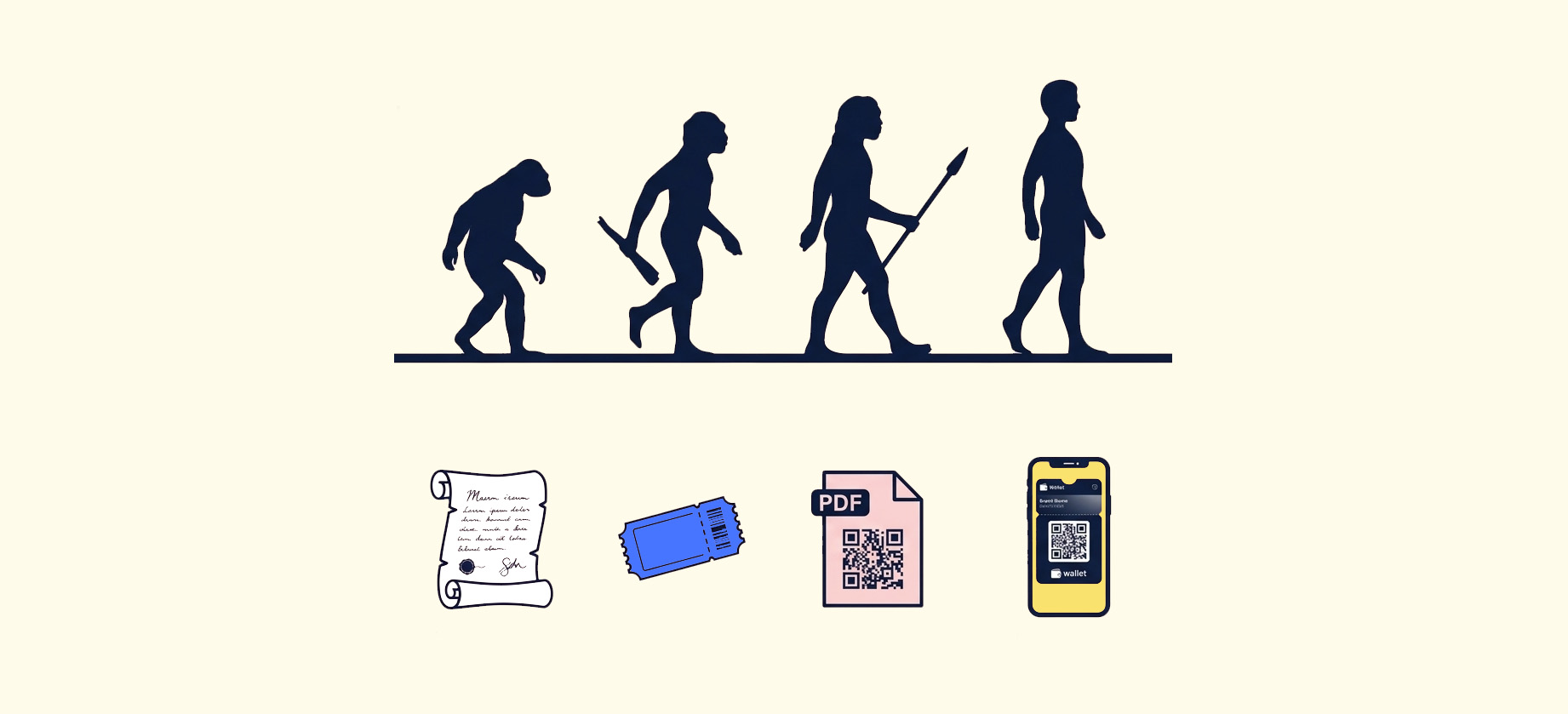
Mobile wallets are not improved PDFs
Wallets are often approached as a simple evolution of PDFs: take an existing asset and “put it into the phone.” It’s a logical starting point… but a limited one.
In many projects, it starts like this:
- A ticket becomes a pass.
- A coupon becomes a pass.
- A card becomes a pass.
Technically, it works. But it reduces the wallet to a simple duplication. In reality, a wallet pass is not just a visual or an identifier. It’s a connected object designed to interact with its environment.
A wallet pass is a living object (not a document)
A wallet pass is not static: it behaves like a connected mini-application.
Unlike a fixed document, it can evolve over time:
- be updated
- change status
- adapt its content
- send notifications
- react to events
In other words, it follows a lifecycle. But for that lifecycle to remain consistent, one rule is critical: the pass must stay connected to a single source of information.
Wallet is a connected project
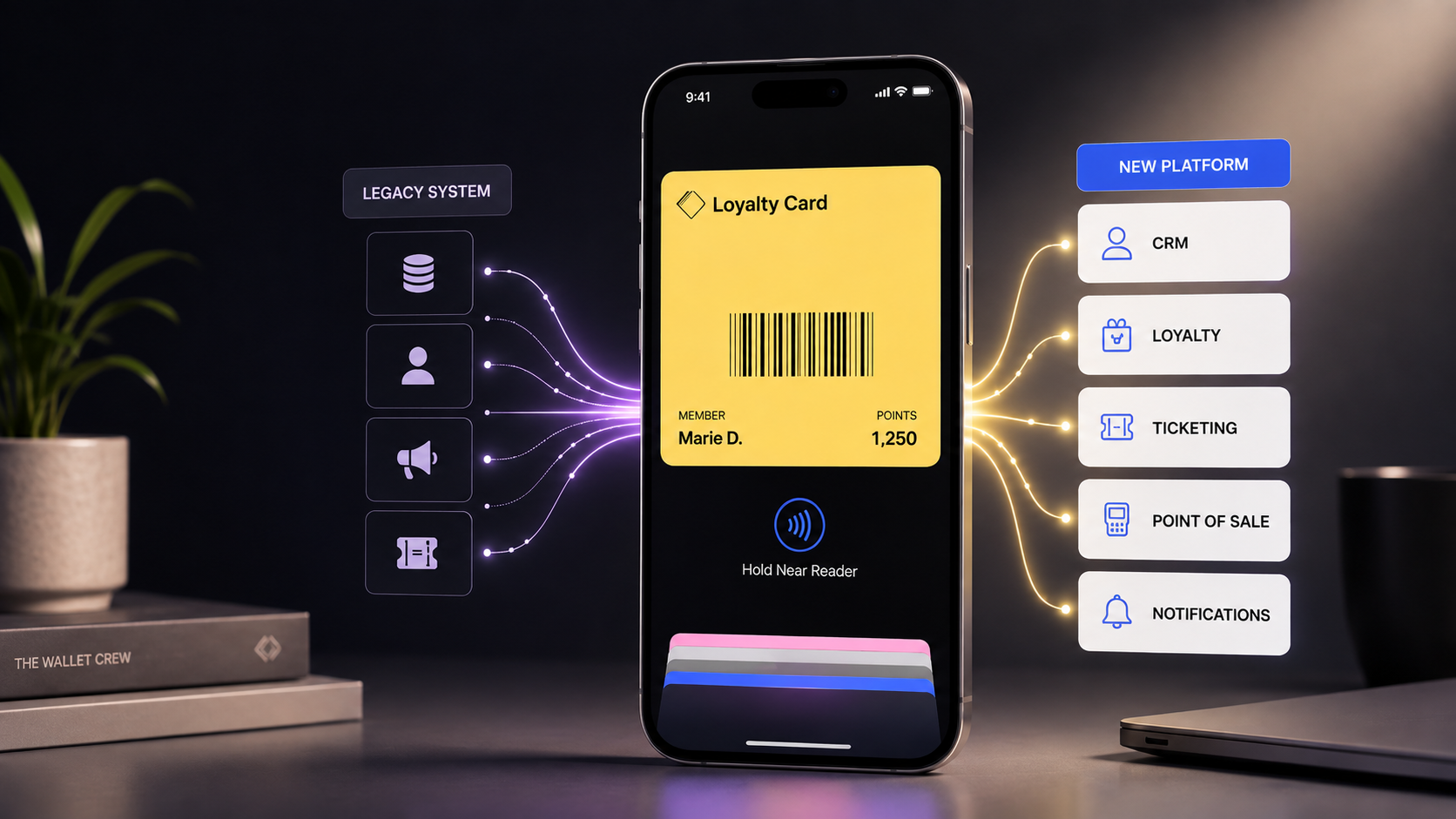
A wallet is not a file. It’s an interface connected to your systems. Creating a pass is relatively simple. Designing a coherent wallet architecture is something else entirely.
Each pass must stay connected to the business systems that hold the data:
- POS
- CRM
- Ticketing systems
- Loyalty platforms
Every change (status, balance, usage, access) must be reflected in real time.
Otherwise, the pass becomes a copy. And copies almost always end up out of synchronization. This connectivity is what enables richer experiences: dynamic content, contextual data, relevant marketing interactions. And this is what turns a pass into a real touchpoint.
Why wallets are still misunderstood
Wallets are often misunderstood because each team projects has its own perspective onto them:
- Marketing teams → a channel
- Product teams → a format
- Tech teams → a technical object
In reality, wallets sit at the intersection of all three.
Each industry interprets wallets through its own history:
- Ticketing players see digital tickets.
- Access control providers see a digital key.
- Marketing platforms see a new engagement channel.
Each view is partially correct. But none fully captures what wallets really are. Wallets exist at the crossroads of three layers: business systems, data, and user experience.
Think of wallets as infrastructure, not as a tool
Wallet is not a feature. It’s an orchestration layer between your systems and your users.
At The Wallet Crew, we see wallets as an infrastructure designed to connect:
- business systems holding the data
- user experience delivered through the pass
- marketing platforms orchestrating the relationship
In this model, the pass becomes a living interface: a ticket evolves, a card changes status, a coupon transforms after use.
The medium is no longer static. It follows the real lifecycle of the customer relationship. Wallets are not just about digitalizing existing assets. They are about connecting assets, data, and experiences in a new way.
In short, mobile wallets are not an incremental evolution. They represent a real paradigm shift. But like any innovation, they are still interpreted through legacy thinking.
The real question is not: “How do I add wallet to my product?” But rather: “What real-world experience can I improve with it?”