
For a long time, the question was simple: which channel should you use to reach your customers? In 2026, that’s no longer the right question. Brands have more options than ever (email, SMS, push notifications, mobile wallets), but attention has never been harder to capture.
Why? Because consumers are exposed to a massive volume of messages every day. In France, people receive on average around 7 promotional emails per day (more than 2,500 per year) as well as 8 to 15 SMS messages per week from brands or marketing communications. The result: messages pile up, attention becomes fragmented, and capturing interest at the right moment turns into a real challenge.
In this context, the challenge is no longer to multiply communication channel, but to create useful interactions, at the right time, in the right context. When messages multiply, their individual impact decreases. Each additional communication competes with a lot of others, increasing the risk of being ignored, creating fatigue, or even driving disengagement.
The customer journey is no longer linear. It is hybrid and fragmented. A single user might read an email in the morning, visit a store in the afternoon, scan a card or ticket in the evening, and complete an action on their smartphone the next day.
In this fragmented landscape, the real question is no longer “which channels should I send?”, but which channel truly supports the action and the objective.
Email: the relational base, essential but saturated
Email remains the foundation of customer relationship strategies.Universal and cost-effective, it allows brands to share rich content: detailed information, offers, summaries, and brand storytelling. It is the channel that structures the relationship over time.
Advantages and 2026 Trends
In 2026, email marketing is more sophisticated than ever: advanced automation, fine segmentation, increased personalization, and AI-enhanced content. When used well, email remains an excellent lever to create consistency across CRM strategies.
But email is also a strategic steering tool. It enables brands to collect massive amounts of data(deliverability, open rates, click rates, conversions, reading time, interactions), offering insight about customer behavior and a capacity to optimize messaging continuously.
Limitations
Despite these advances, email faces a structural issue: saturation. Inboxes are overflowing, attention is often delayed, and emails are rarely consulted at the exact moment when the user needs to act. Email informs and prepares, but it doesn't support real-time usage, especially in physical contexts.
SMS: instant alerts, at a high cost
SMS is the perfect urgency channel.Direct and personal, it guarantees fast reading and immediate reaction. It is widely used for confirmations, reminders, and critical messages.
Advantages and 2026 Trends
With the rise of RCS (Rich Communication Services), SMS is evolving toward richer formats: interactive content, visuals, and clickable elements. On paper, the experience becomes closer to an app, with stronger engagement potential.
Limitations
This effectiveness comes at a price. SMS remains expensive at big scale, heavily regulated, and quickly perceived as intrusive. Its logic is mainly transactional and short-term: it captures attention in the moment, ut cannot be considered a lasting experience.
Mobile Wallet: When Communication Becomes Experience
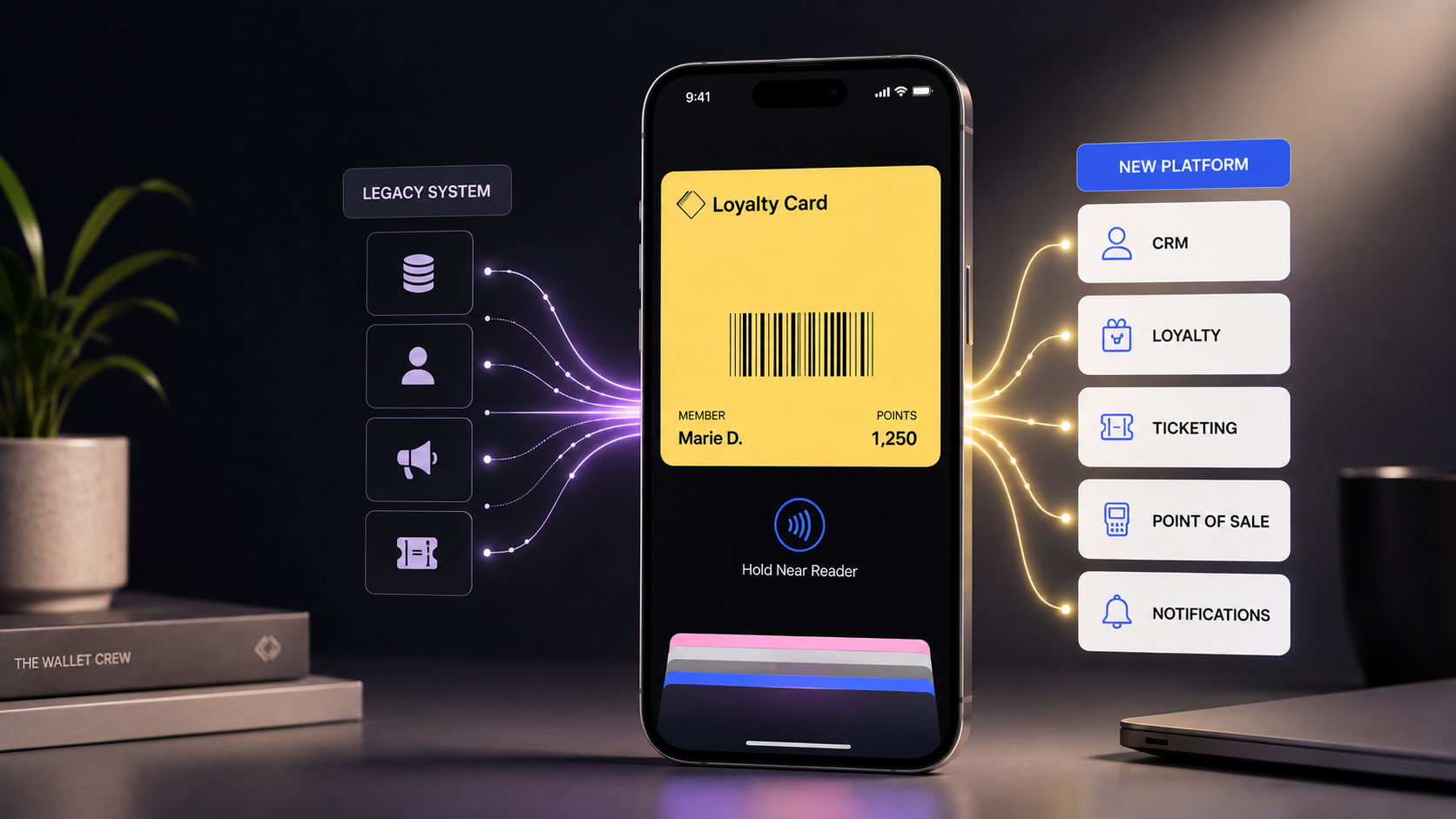
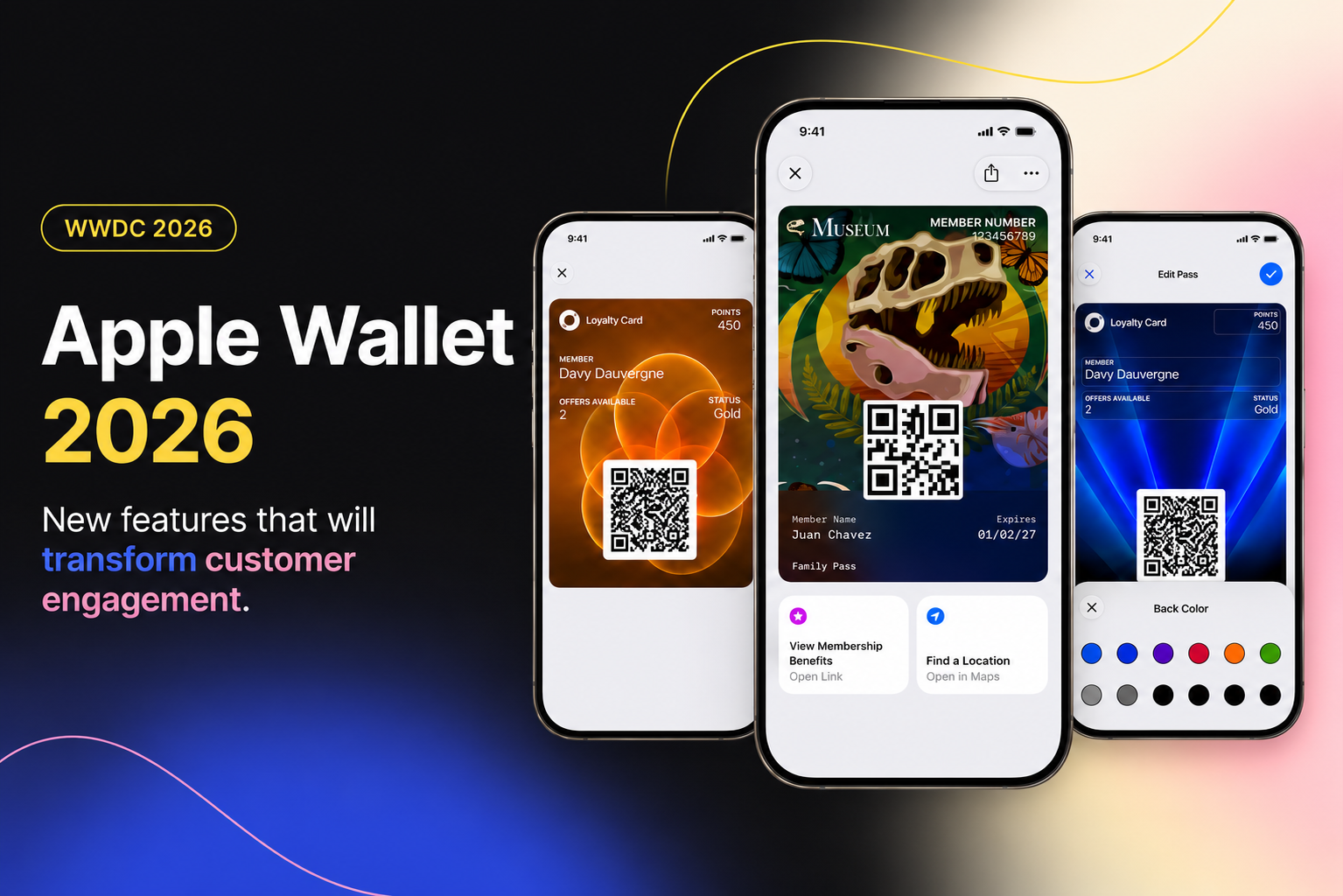
Mobile wallets (AppleWallet and Google Wallet) allow users to store cards and tickets directly on their smartphones. Unlike email or SMS, they are not based on sending successive messages, but on a living card that is always accessible and updated in realtime. This is much closer to a native mini-app than a traditional messaging channel.
Advantages and 2026 Trends
In 2026, the wallet is becoming a key interface between digital and physical journeys:
• Simplified access to venues and services
• Seamless flow at checkout or event entry
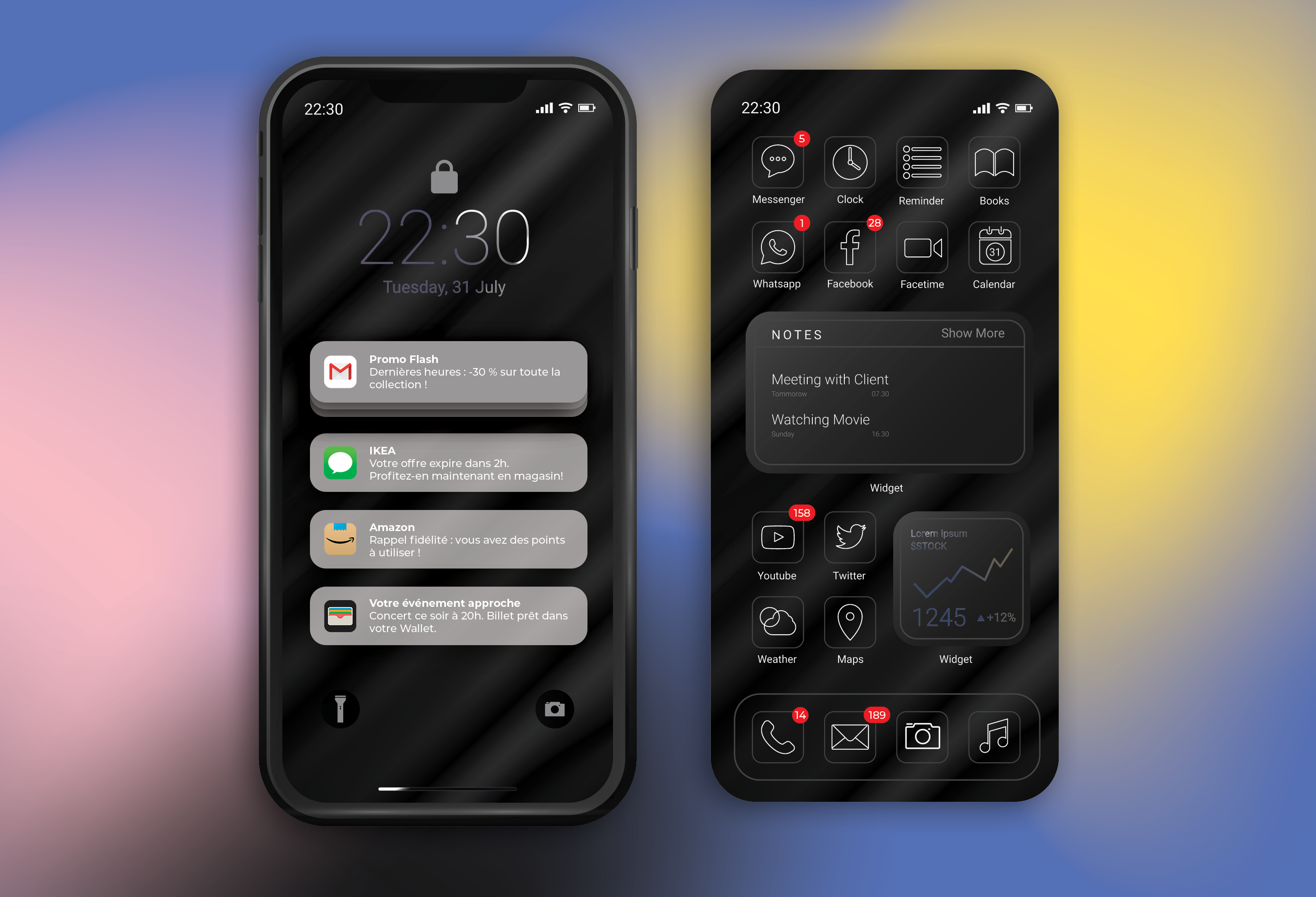
• Contextual notifications
• Direct connection to existing systems (CRM,POS, ticketing, access control)
Apple Wallet and Google Wallet both allow brands to send push notifications to pass holders. With Apple Wallet, brands can already display personalized messages directly in the notification, while Google Wallet is progressively moving in that direction.
Limitations
The wallet also changes how performance is measured. There is no traditional open rate, and notifications can be disabled. Engagement is not measured through classic marketing KPIs, but through real usage: scans, checkouts, access events, service activation, purchases.
For some, this is a limitation. In reality, it is an invitation to measure engagement differently, through actual behavior, not just message interactions.
The Strength of the Wallet
Mobile wallets work differently from traditional channels and that is exactly their strength.
Unlike email or SMS, messages do not accumulate. There is no inbox, nomessage history. The wallet centralizes useful information in a single object:a card or ticket that updates in real time and always reflects the most currentstate of the account, service, or event.
Push notifications play a key role in this logic. They are used to draw attention to a change inside the wallet, without multiplying messages or interrupting the experience. The wallet becomes a simple, immediate access point (between a website and a mobile app) with no login and no download, but capable of displaying personalized and contextual information.
On this foundation, the wallet supports two complementary types of communication:
Transactional and informational communication: automated, contextual, and useful (reminders, confirmations, practical information, status changes).
Marketing communication, when it truly makes sense: an offer linked to an event, a loyalty benefit, or an additional service.
The wallet informs and supports usage, without trying to capture attention absolutely. This ability to centralize, update, and signal the right information at the right moment is what makes it a key driver of customer experience today, at the intersection of digital and physical journeys.
Complementary Channels, Activated at the Right Moments
Email, SMS, and mobile wallet do not serve the same purposes and the same moments in the customer journey.
• Email is ideal to inform, prepare, and recap, before and after the experience.
• SMS is relevant for critical moments, when information must be received immediately.
• Mobile wallet makes sense at the heart of the experience, when the customer is actually acting: entering a venue, scanning a ticket, checking out, accessing a service.
Used together, these channels cover the full journey without over-soliciting customers. Email structures the relationship, SMS secures the moment, and the wallet supports real usage.
💡 In 2026, the channel that truly engages is not the one that speaks the loudest, but the one that simplifies the experience at the right moment. And this is exactly where mobile wallets, still largely underused, reveal their full potential.