
.png)
Managing tickets at event entrances is a real challenge for many organizers. Adding e-tickets to mobile wallets brings clear benefits and gives attendees a smooth, hassle-free experience. This article explains how easily this technology fits into your strategy.
Which sectors are concerned?
Many types of venues and organizations that attract large crowds, or need secure and efficient ticket management, are concerned:
- Museums
- Theme parks
- Festivals
- Concerts and shows
- Theaters
- Sporting events
- Cinemas
- Conferences and trade shows
- Zoos and aquariums
- Clubs and bars
- Historic sites and monuments
The challenges of entry management
Managing entry at high-traffic venues is no small task. It takes precise coordination to deliver a smooth and efficient experience. Several things need to be considered:
- Using technology to simplify ticket sales, distribution and management
- Modernizing entry points for better connectivity
- Securing access so that only holders of valid tickets can enter
- Making buying and using tickets as intuitive and pleasant as possible
- Offering flexible options to handle the unexpected (refunds and exchanges)
- Protecting attendees' personal information in line with applicable regulations
Why go digital with entry tickets
More and more consumers prefer digital tickets because they are easier to use. To deliver a flawless customer experience and keep your business growing, it pays to follow this trend. Here is why.
Lower printing costs
Digital tickets remove the need to print physical tickets entirely, which means real savings on paper, ink and other printing supplies. Tickets are sent instantly by email or straight to attendees' smartphones, with no postage and no staff needed for physical distribution.
Better security
E-tickets are stored securely on attendees' phones, which greatly reduces the risk of loss or theft. They also include security features that are hard to copy, such as unique QR codes or barcodes, for a safer experience for attendees and organizers alike.
Faster ticket checks at the entrance
Nothing is worse than an endless queue. Digital tickets are checked almost instantly by scanning the QR code or barcode, which makes a big difference at large gatherings.
Tickets that are easier to find
No more digging through a bag for a ticket that turns out to be folded or torn. Customers can buy and keep their digital ticket anywhere, at any time, on their phone.
A smaller environmental footprint
Printing less paper reduces your environmental footprint, and improves your image with an audience that cares more and more about the environment.
Customer data collection
Digital tickets make it possible to collect detailed information about attendees at purchase or registration:
- Preferences
- Demographics
- Attendance history
- And more
Organizers can use this data to personalize communications and offers for each attendee and improve their experience. Any data collection and analysis must, of course, comply with privacy and data security laws.
More flexibility
Digital ticketing systems let users change their tickets easily through an online platform or a mobile app. Changing the date, seat or ticket category takes a few clicks. Users can also cancel tickets directly and receive refunds or credits according to the event's policy. Staff save time and customers are happier.
What are the options for digital tickets?
PDF tickets
PDF tickets are easy to download from an email or a web page, and users can save them on their devices and print them if needed. The downside is that PDF files are hard to manage on a phone, especially when users have to switch between apps. It is also hard to zoom in properly on ticket details such as the QR code, and low screen brightness can make the information difficult to read.
Native mobile apps
Native apps offer a range of features that improve the user experience:
- Resale management
- Ticket security
- Dynamic QR codes (they change with each opening or transaction, which makes copying or counterfeiting extremely difficult)
The problem is that customers have to download an app and create an account, which can be a barrier, especially if the interface is not intuitive. NFC integration can also be complex because of restrictions set by some smartphone makers, such as Apple, and the technical challenges for developers. And the initial cost of building a native app, plus ongoing updates and maintenance, can be high.
Mobile wallets
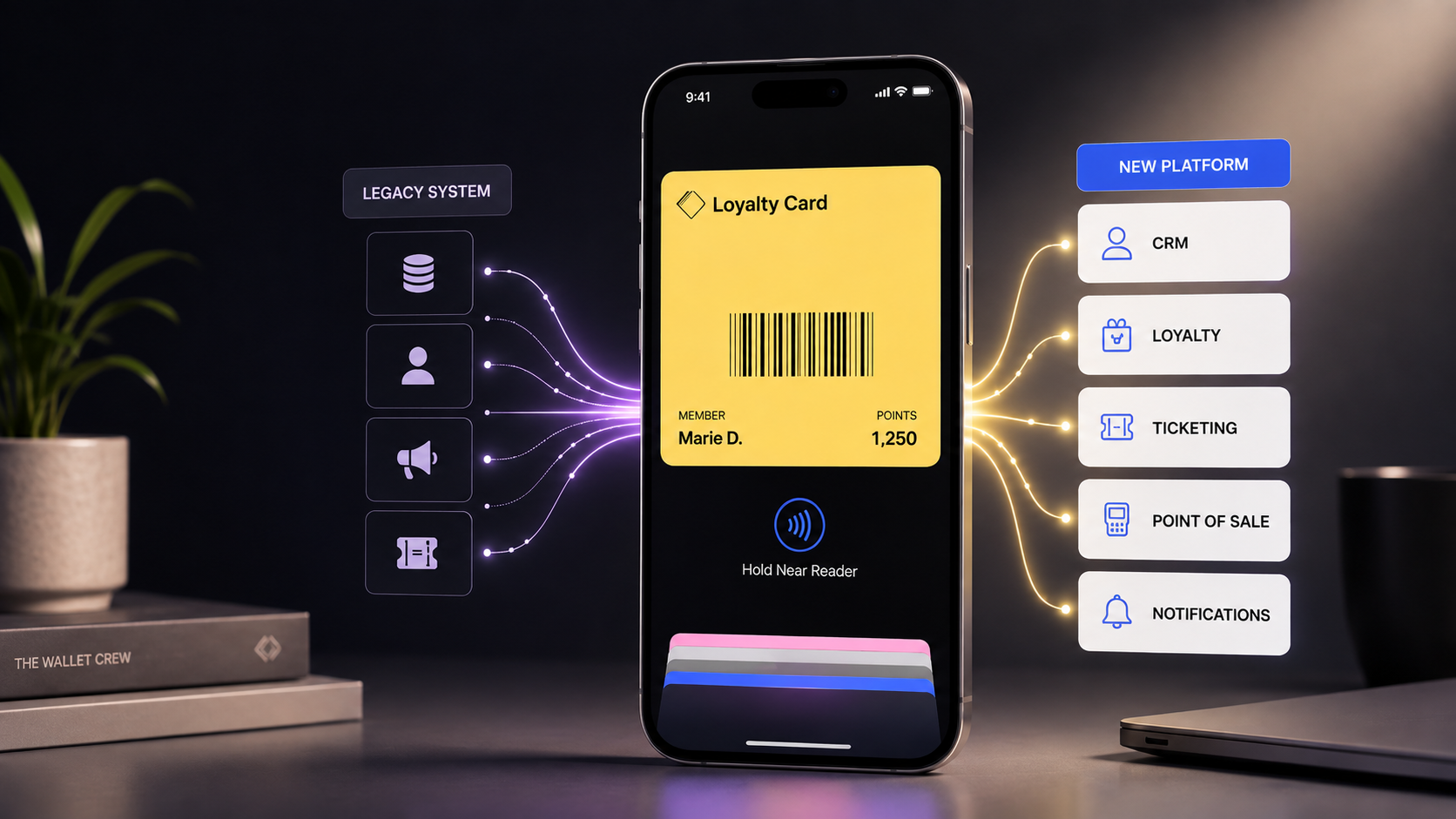
Attendees can add tickets to their wallet from a link sent by email, directly on the ticketing website, or by scanning a QR code at the event entrance. Their tickets stay organized in one place, available at any time on their smartphone. Connecting mobile wallets to existing ticketing systems can be a challenge, though, as it often requires technical work to make the different platforms compatible.
Key features of digital ticketing
Digital ticketing features have evolved to significantly improve the user experience and event management. They include:
- Custom ticket layouts: ticketing providers use dedicated templates that clearly display the key information on the ticket (seating, start and end times, venue and other relevant details).
- Automatic reminders: ticketing systems can send reminders on the day of the event or a few hours before (last-minute information, directions or weather alerts).
- NFC and dynamic QR codes: technologies such as NFC (Near Field Communication) and rotating QR codes that change periodically prevent duplication. The result is fast, secure checks and less fraud.
- Links to digital wallets: tickets can easily be added to wallet apps such as Apple Wallet and Google Wallet, so users can store, manage and access them from their smartphone.
- Semantic tags and phone controls: some advanced features can automatically switch the phone to silent mode during the event, along with other context-based automations.
The role of mobile wallets in e-ticket management
What is a mobile wallet?
Mobile wallets, also called digital wallets or e-wallets, are apps designed to store and manage different kinds of digital information. Apple and Google each offer their own wallet app, built into their smartphones for an integrated experience with nothing to download.
For iOS users: Apple Wallet
On iOS devices, the app is called Wallet (formerly Passbook). Apple Wallet is installed on every iPhone and lets users keep in one place their:
- Credit and debit cards
- Loyalty cards
- Transit tickets
- Boarding passes
- Discount coupons
- And more
It uses NFC (Near Field Communication) for contactless transactions, secured by Touch ID or Face ID for an extra layer of security.
For Android users: Google Wallet
On Android, the equivalent app is Google Wallet. It offers features similar to Apple Wallet, such as storing cards and passes and contactless payments, and is available on most Android phones or can be downloaded from the Google Play Store. Google Wallet also uses NFC for payments and secures transactions with authentication methods such as a PIN, pattern or biometrics.
Third-party mobile wallets
Beyond Apple and Google, there are many third-party wallet apps on the market. They must be downloaded and installed separately because they are not preinstalled on smartphones. These wallets often offer distinctive features, such as extra rewards, specific payment options or compatibility with particular banks and financial institutions.
What is a mobile wallet used for?
The best-known use of a mobile wallet is contactless payment with a smartphone. But its real strength is digitizing a wide range of marketing assets:
- Loyalty cards
- Coupons and special offers
- Event and transit tickets
- Gift cards
- Boarding passes
- Promotional messages and notifications
- And more
The possibilities are endless. Consumers get access to a brand's benefits directly from their phone, and can add a card in one tap from anywhere: a dedicated email, the brand's website or in store. Mobile wallets have become a powerful customer relationship channel.
Optimize your ticketing with mobile wallets
Centralize e-tickets
Mobile wallets act as a single place to store and manage all e-tickets. Instead of juggling emails and apps, users access their tickets from one interface and can easily check the details of each ticket, including:
- Dates
- Times
- Venue information
Depending on the ticketing system, they can also change, cancel or transfer tickets from their phone. This benefits attendees and also simplifies interactions for organizers.
Make digital tickets easy to use
The customer journey takes three steps:
- First, the customer receives the ticket on the organizer's website or by email.
- Next, they add the ticket to their mobile wallet in one tap.
- At the venue, they simply show the QR code, clearly displayed on their phone, to be scanned.
It is that simple.
Strengthen customer data security
Mobile wallets offer stronger protection for the confidentiality and security of personal and transaction information. The Wallet Crew, for example, has built specific features to help comply with regulations such as GDPR, CCPA and LGPD.
Multilingual support
Whether at museums, sporting events, concerts or festivals, visitors often come from all over the world. By supporting several languages, mobile wallets are accessible to more people, which makes international attendees feel welcome and reduces the risk of misunderstanding instructions.
Case study: Radio France uses mobile wallets for its ticketing
Radio France, a leading French cultural institution, welcomes 200,000 visitors every year to concerts and events at the Maison de la Radio et de la Musique. Until recently, a third of its tickets were still printed. To change this, Radio France partnered with The Wallet Crew to add digital tickets to attendees' mobile wallets. From the first day of deployment, more than 35% of tickets were added to mobile wallets. Attendees now enjoy fast, smooth access to events directly from their phone, with tickets that are fully secured.
Conclusion
Ticketing raises many challenges that call for innovative solutions to manage entry efficiently and securely. Digital tickets are a way to modernize event access:
- Lower costs
- Stronger security
- A better attendee experience
In this context, mobile wallets play a central role in e-ticket management. By keeping tickets directly on attendees' smartphones, they offer a richer, seamless experience and boost engagement. A clear advantage in a fast-changing market.